
🎼 background music
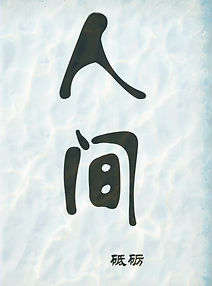
The People
Thierry Wong
1 Cherish
2 Trudge

Water Lily Legacy
Water flows on and on,
toward the ends of the earth.
By the water’s edge we linger,
always stirred to sorrow.
To drift;
is the destiny of all born of water.
The years;
are but wharves where we pause to rest.
This fleeting life;
whether entrusted to duckweed,
to grass,
to lotus;
we gaze across at one another,
seeking the dreams locked deep within.
Rivers and lakes;
whether transformed into leaf,
into blossom,
into lotus root;
when we turn back,
we cannot help but look toward that distant late autumn.
Some stories were told to me by my mother.
Some were told to my mother by her mother.
Some were told to my mother’s mother by her mother…
Stories are fragmented, broken, obscure;
like shattered bricks and tiles left among ruins.
Stories are remote, hazy, drifting;
half-visible, half-dream;
like smoke curling upward before an altar.
1 Broth
Era: 1940s
Venue: Bugis Street
Leaving the cramped, dim room on Bugis Street, the young woman found that although the sky was bright, her heart was not.
Her child’s ashen face still swam before her eyes; the old ah ma’s half-curse, half-kind counsel still rang in her ears:
“Go out for a walk. When the child sees his mother’s eyes red from crying, how can she bear to leave? Gasping day and night, never quite breathing nor quite gone; what a torment…”
Distraught, she wandered through the nearby alleys. Helpless. Unmoored. She did not know how long she had walked when someone suddenly called out, “Auntie, what’s wrong?”
Grateful for a listener, she poured out her story; how the smoke of war had brought dysentery upon her child, who for a week had been drained and limp from relentless diarrhoea. With sirens wailing at any moment, where could one find a doctor?
The old woman handed her several bundles of greens.
“Take these. Boil them into soup for the child.”
When the tide has turned, is all effort futile? Or does the mystery of life sometimes hinge on a single thought? No hope should be abandoned. She would try.
And a miracle occurred.
After the first bowl, the diarrhoea stopped.
After the second bowl, the child slept peacefully.
After the third bowl, strength slowly returned……
Once her daughter recovered, the young woman led her by the hand to the market to thank the old woman, and to pay for the vegetables she had forgotten in her panic.
Strangely, though she searched among the bustling stalls, she could not find the old woman again.
The talkative household helper muttered at her side:
“When sincerity is utmost, even metal and stone will yield. I say that old woman must have been Guanyin in disguise. Otherwise, how could a few wrinkled, unremarkable greens be such a miracle cure?”
Index of persons: The little girl was my mother. The young woman was my grandmother.
Postscript: Later we learned the vegetable was bitter lettuce. It is rarely sold in markets nowadays. My mother left Bugis Street long ago, yet the memory of bitter lettuce never left. Whenever she walked downhill past a vegetable stall, she would stop and pick up a few bundles to bring home. Was it the salmon’s instinct to return? Or gratitude written into life itself?
Family precept: Sincerity.
2 Tears
Era: Qing Dynasty
Venue: The dusty road north from Guangzhou
If having several wives and concubines was a man’s glory, what could a frail woman boast of? What could she rely on? What could she hold in her own hands?
My lord treated me kindly, always attentive. Though only the second concubine, I was taken along on his journey to the capital; an opportunity even the first wife had not been given.
Yet why was the road so hard? My body burned; my muscles ached; dizziness and weakness overcame me.
Ah……
No sighing. Has life’s path ever been easy?
Was it fortune to be born in Suzhou? A gift to be born beautiful?
Thus the mistress bought me as a maid.
Thus she presented me to my lord as a concubine.
Thus I now travelled this road to the capital……
Was my fate too meagre for the splendour of Beijing? The farther north we went, the worse my coughing grew.
Still, I have little to resent. Born in Suzhou, fed in Guangzhou, and now……
But I cannot leave this world yet. My children are still young. Without me, how will the “Queen” treat them?
Sister, you bore one and lost one. I bore one and raised one. It is fate, beyond our choosing.
For the sake of our shared husband, do not make things hard for the children.
The road ahead is always rough, whether one walks barefoot or rides in a sedan chair.
The hardship is not in walking, but in walking with grace.
Index of persons: The concubine was my great-grandmother—my grandmother’s mother.
Postscript: She died in Liuzhou, Guangxi, a place famed for fine timber. Thus, though she died far from home, she was laid to rest in the finest wood. The small box my great-grandfather once used to carry court beads to the capital later became my mother’s childhood toy.
Family precept: Contentment.
3 The Waterway
Era: 1920s
Veneu: Pingzhou, Nanhai, Guangdong
“The journey by water is long. Father has little to give you.”
A daughter grown must marry. The young man chosen was a merchant in Nanyang, modestly successful. Not from great wealth, but steady and kind-eyed; his future promising.
“I have been busy with official duties and neglected you. This marriage, at least, I arranged with care, to repay in part my debt to you and your mother.”
“You resemble your mother. Had your ear not been split by your mad aunt’s scissors when you were young, you would be a living angel; bright eyes like water, a waist slender as a water snake, a smile shy as a lotus…”
“Let bygones be bygones. Do not blame your aunt. Be like your mother; soft, yet resilient.”
“Singapore is far, but here war is constant. Safer to marry south.”
“These dozen gold bars; take them. If life there fails you, sell them and buy your passage home.”
Index of persons: The speaker was my great-grandfather. The girl was my grandmother.
Postscript: She never sold the gold. On her deathbed, she divided the bars among her nine children. Gold bars are rarely traded now; they were melted into rings, bracelets, necklaces—glimmering, swaying on the bodies of her descendants.
Family precept: Forgiveness.
4 Flowing Sleeves
Era: 1960s
Venue: Ah Hood Road
“Never cook all the rice in one pot.”
During the Japanese Occupation, to avoid the annihilation of the entire family, some members moved from the city to Ah Hood Road. For three years and eight months, no tragedy visited that place; it was deemed blessed. After the war, the family purchased over thirty thousand square feet of land and built a grand estate.
The matriarch was called Ah Da.
She managed meals for more than twenty people, doing the marketing, instructing servants, arranging, cooking and serving. On Mondays, Wednesdays, and Fridays, barley water. Sunday afternoons, tea and pastries.
In a household so large, harmony required art. To ensure punctuality at meals, Ah Da’s maxim was:
“Those who contribute get rice without meat; those who do not, sorry, nothing for you.”
If a child lingered too long in the lavatory, she would quip, “Are you laying golden eggs or silver ones?”
On birthdays, she would treat us with an added roasted goose leg next to the bowl.
She also ruled over three dogs: Happy, Money, and Lucky. Happy is friendly. It wagged at everyone. Money was lazy, its fur speckled like copper coins. Lucky, fierce and insecure, barked and lunged at all. Their names were plain, yet revealed the mistress’s wishes.
Beyond the dogs, there was a pigeon house, an eighteen-petaled lotus pond, a great lawn with swings. Childhood unfolded in colour.
Ah Da loved opera; the gongs and drums, the flowing sleeves, and dragged a dozen children along to performances.
The thunder of percussion magnified the stage; the fluttering sleeves spun out tender sorrows. Yet to the children, even the grandest spectacle was but a passing scene. They had their own world; buying peanuts with pocket money and wearing them as earrings. On stage, painted beauties; off stage, eccentric little sprites.
Index of persons: Ah Da was my grandmother. None of her nine children called her “Mother”; all called her Ah Da.
Postscript: When Happy grew old, it disappeared. Some said it lost its way; others said that dogs leave so their masters will not witness their death. In 1969, the estate gave way to Toa Payoh. If Happy’s departure was a choice, the family’s dispersal was not.
Family precept: Harmony.
The gongs were loud, yet Ah Da watching opera seemed most serene.
On stage, lovers faced endless trials; yet Ah Da watching seemed most joyful.
5 Drifting
Era: 1960–2003
Venue: Modern times
In the estate stood an ancestral hall. Entering meant more than prayer; we competed to see whose kowtow struck the floor loudest. Never again have I seen devotion so extravagant.
In Primary Six, I learned that my cousin had won a scholarship to study Christian theology abroad. I could not accept it. Was it betrayal? How could a Beatles-haired partygoer become a devout Christian?
He was the eldest grandson, much favoured. At Mid-Autumn, while we carried only small lanterns, he bore a grand revolving one. Grandmother’s rules never bound him.
Before leaving, he spoke to my brother and me about Jesus. I listened politely; he knew persuasion was unlikely.
Three months later, he wrote in English:
“I chose to write to you because your mischief left an impression.”
A year later, he returned, training unfinished. I did not ask why. After military service, he left again, this time to study economics. From idealism to pragmatism; how did he ferry himself across? I do not know.
He excelled in New Zealand, rose swiftly upon returning, becoming a market consultant in a stock firm.
Years passed; cousins drifted apart. We met mostly at Lunar New Year.
This year, he struck another gong in his life: deciding Singapore offered no room to stretch, he would emigrate to New Zealand.
On the eve of departure, he left my brother a refrigerator full of wine. I asked if he still attended church.
He did not answer directly.
“I once prayed fervently for Grandpa and Grandma to become believers, so that one day we might be together forever.
But……
Heaven or hell?
Let it be.
If nonbelievers must dwell in hell,
then I choose;
to be with my grandparents.”
Index of persons: The cousin is my cousin. The “I” is myself.
Postscript: One misty Qingming, I found myself in Suzhou. My dark eyes roamed, seeking not only its bridges and waters, but the famed Suzhou maidens; eyes moist as spring, waists supple as water snakes, smiles shy as lotus.
The seasoned guide, catching my restless glance, laughed: “Suzhou girls are no longer so beautiful; those who are have married far away.”
Suddenly I thought of my great-grandmother. Of generations drifting; tumbling, wandering, returning and surging.
My eyes blurred.
Family precept: Blood is thicker than water.
My cousin’s words moved me deeply.
To My Readers
If blossoms bloom and fall by heaven’s will,
between petal and parting,
have you glimpsed their fleeting sorrow?
If unceasing footsteps cross spring winds and autumn rains,
have the muddy footprints
ever stirred your heart?
Blooming is a flower’s blessing to earth.
It blooms because it is its season.
Falling is not despair;
blame neither tender wind nor ruthless rain.
Because blossoms bloom and fall,
the earth has memory.
Because blossoms bloom and fall,
there is a season of flowers.
When you walk the flowered path,
may you stoop and gather
a dappled mood of your own.
Writing is instinct;
a persistence without reason.
To publish bears no ancient mission of “literature conveying the way,”
nor pursuit of fame.
To publish is to seek a new meaning
for Chinese writing on this small island unlikely to draw any attention.
Completed on 30 April 2003
Nominee Award on Generational Stories organised by Singapore Literature Society 2005
📹
Ah Hood Road Video 1: Grandma’s house https://youtu.be/TuKmxQ07SGo?si=L6QT0Wlu3zypPaOv
Ah Hood Road Video 2: My childhood https://youtu.be/unFZd7ehQ8A?si=q8cLyYIrr5E60sql
Back to Trudge Catalogue


